Summary
TCP
reliable, byte stream-oriented transport protocol
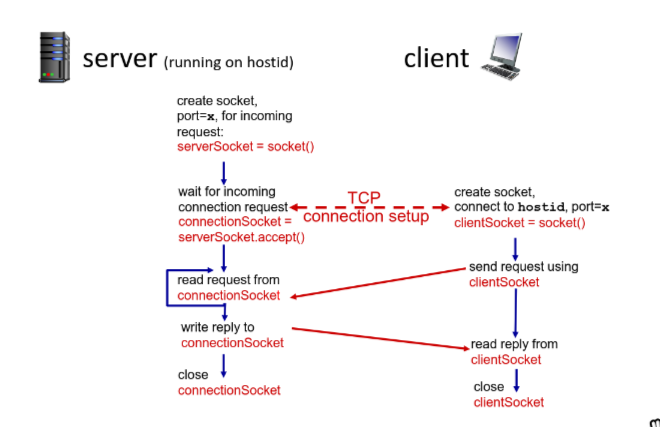
- server process must first be running
- server created socket for client
- client create socket to IP address, port number
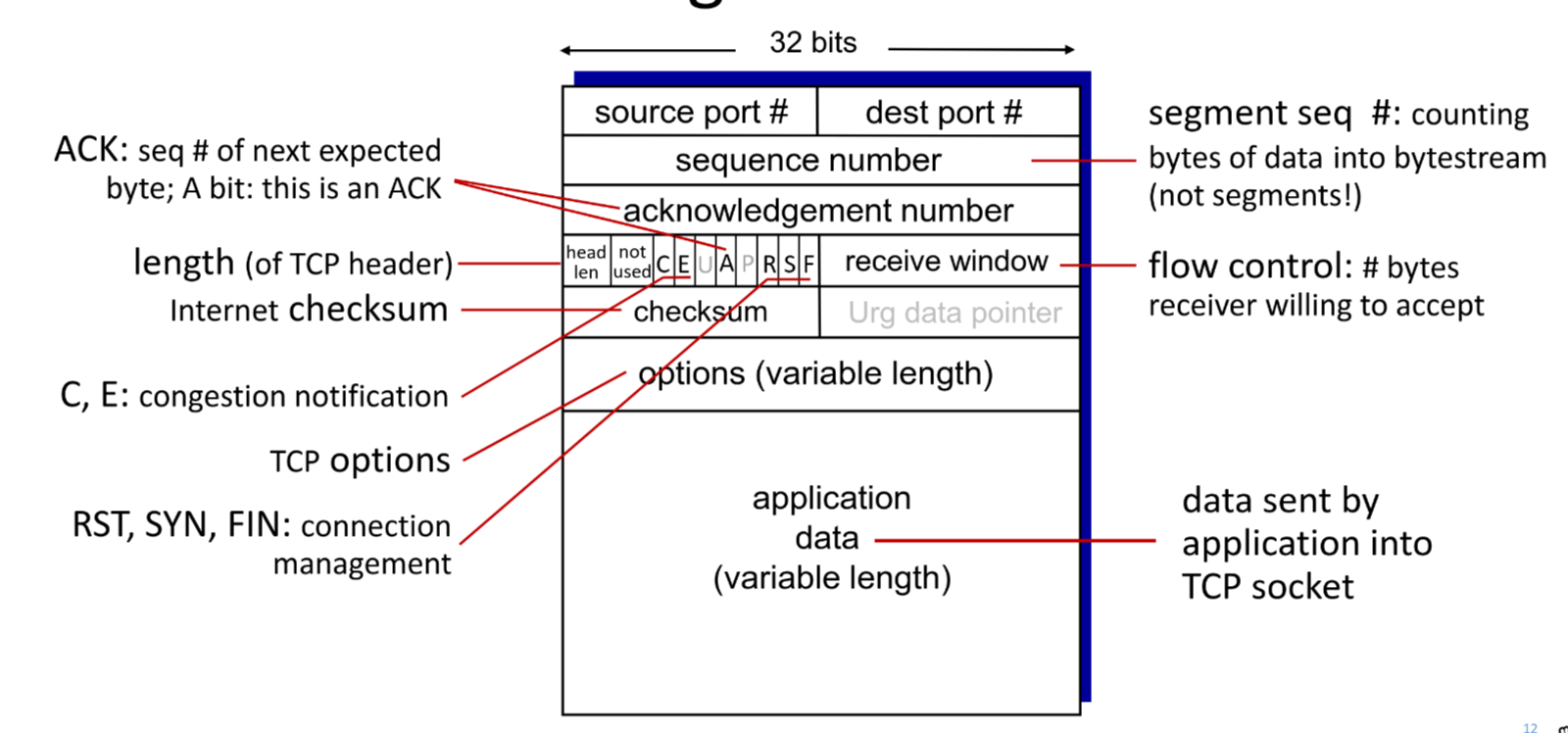 -
-
Multiplexing
Connection
Open
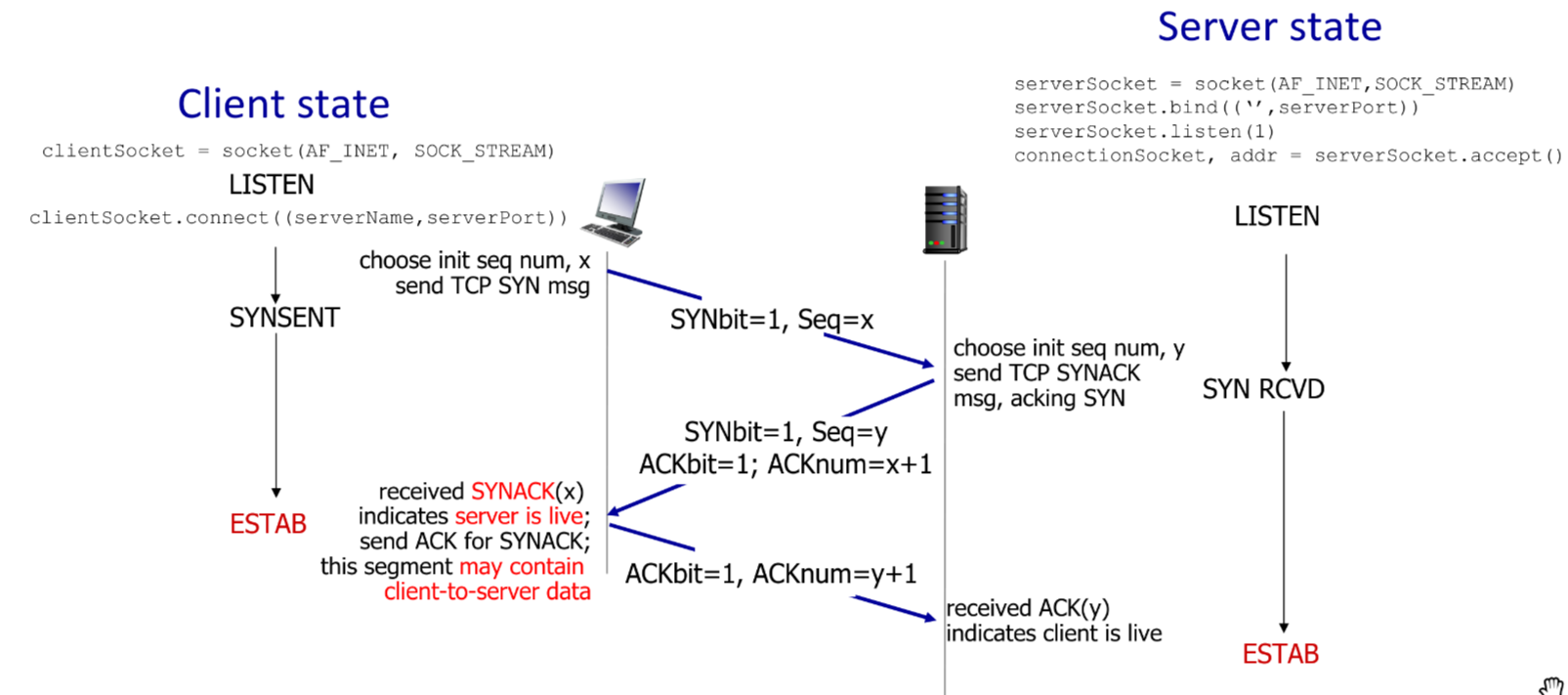
TCP 3-way handshake
- Initiating client requests a client-to-server: client send SYN
- The server acknowledges and requests a server-to-client: server send SYN, ACK
- The initiating client acknowledges the server to client: client send ACK
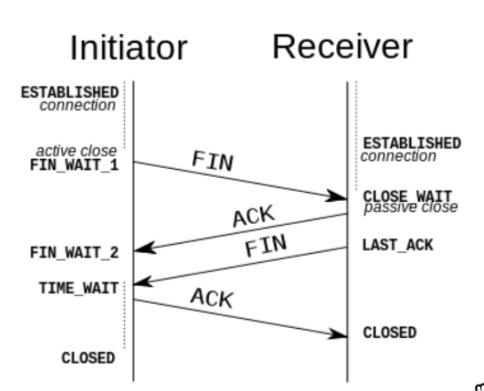
Closing a TCP connection
- client/server each close their side of connection by send TCP segment with FIN bit = 1
- respond to received FIN with FIN, ACK
- TCP connection is closed when both sides have received ACK for their FIN
Socket
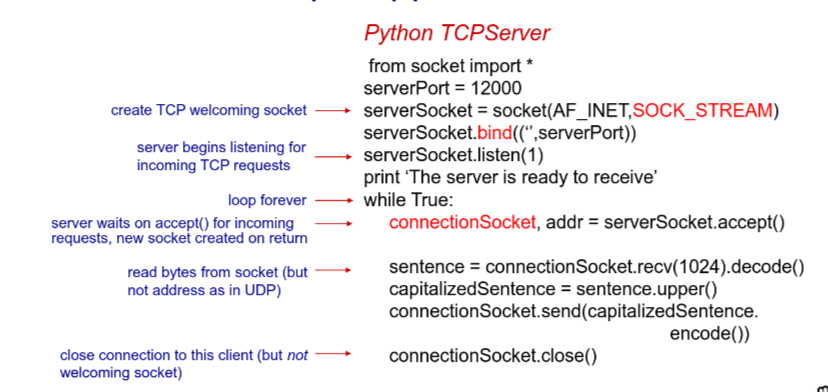
TCP Server
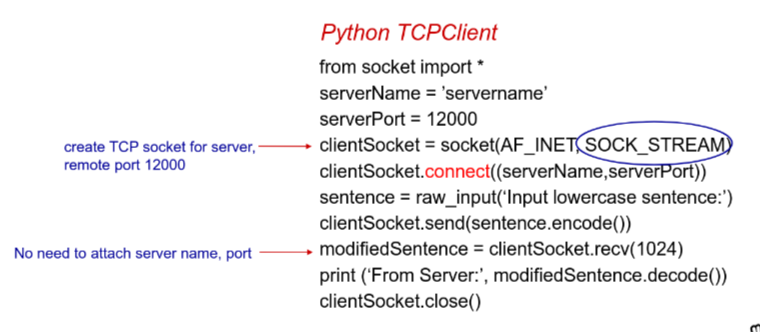
TCP client
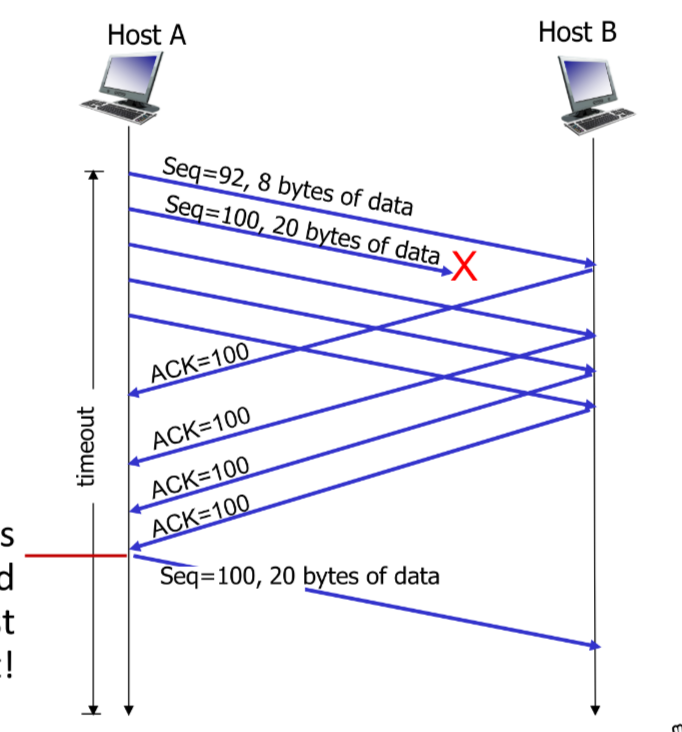
Fast Retransmit
- Receiver sends duplicate ACKs if it receives out-of-order segments (indicating a segment may
- Sender retransmits a segment if it receives 3 ACKs for the same data (duplicate ACKs)
Flow Control
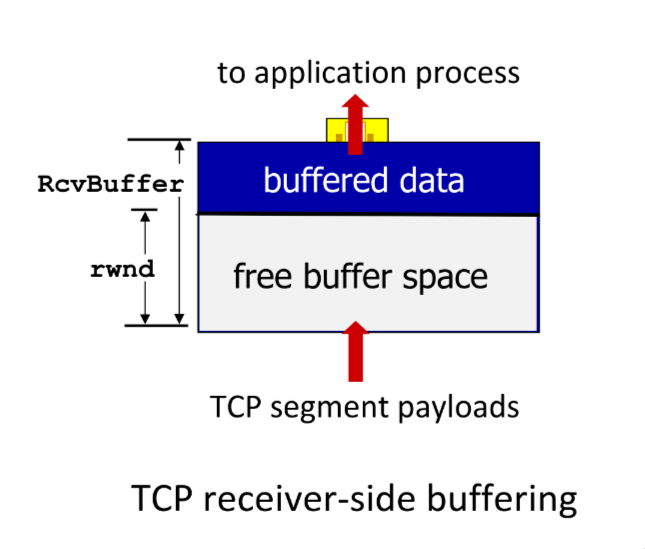
- If network layer delivers data faster than application layer can read, receiver’s buffer may overflow
- TCP uses flow control to prevent overflow: sender limits amount of data in transit
- Receiver advertises available buffer space (receiver window) to sender in
rwnd(receive window) field in TCP header - sender limits amount of unACKed dita to received
rwnd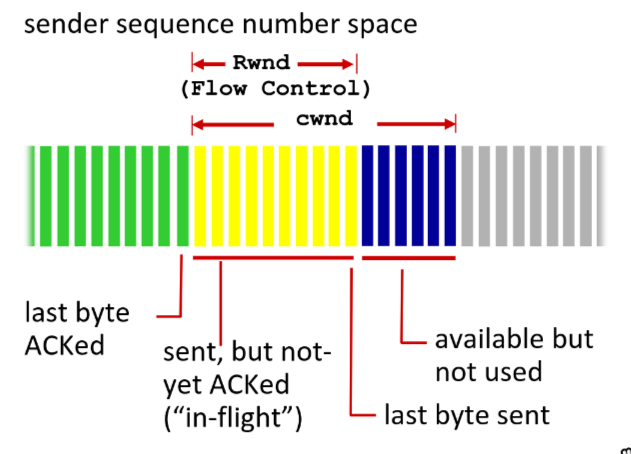
End-end congestion control
- no explicit feedback from network
- congestion inferred from observed loss/delay
- used in TCP
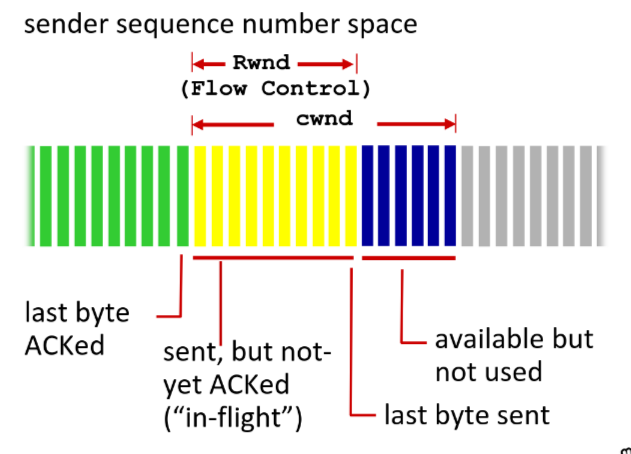
- TCP sender limits
- is dynamically adjusted based on perceived congestion level
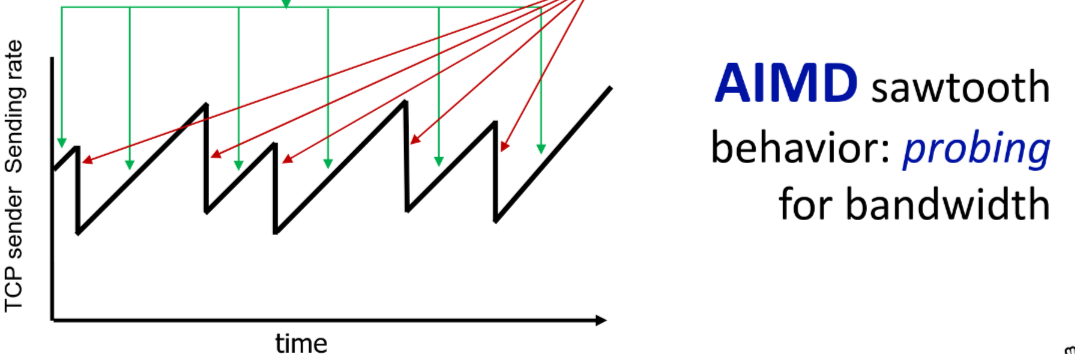
AIMD
Note
Additive Increase: increase sending rate by 1 maximum segment **Multiplicative Decrease:**cut sending rate in half at each loss event
- Senders can increase sending rate until packet loss occurs, then decrease sending rate on loss event.
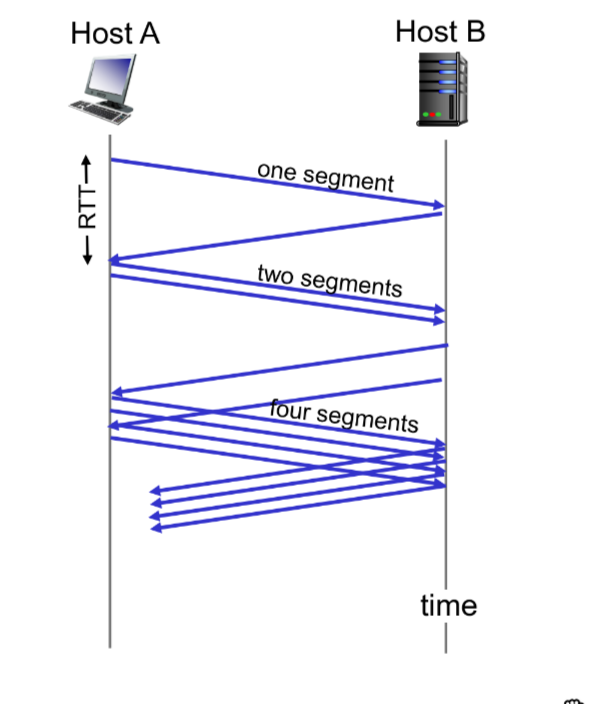
Slow Start
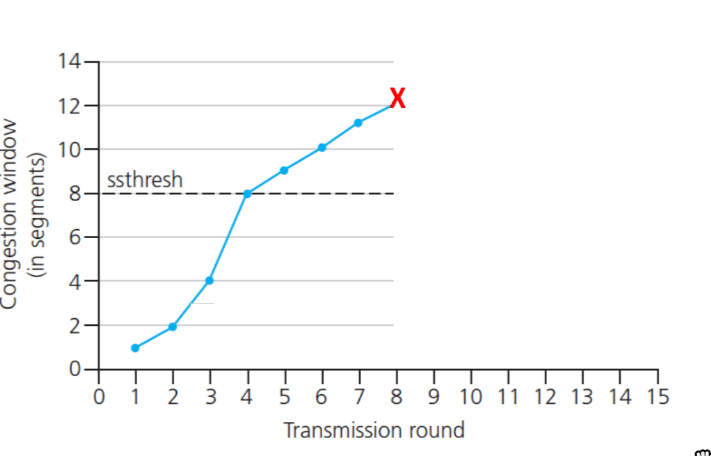
when connection begins, increase rate exponentially until first loss event
Back to linear scale
Switch back to linear when
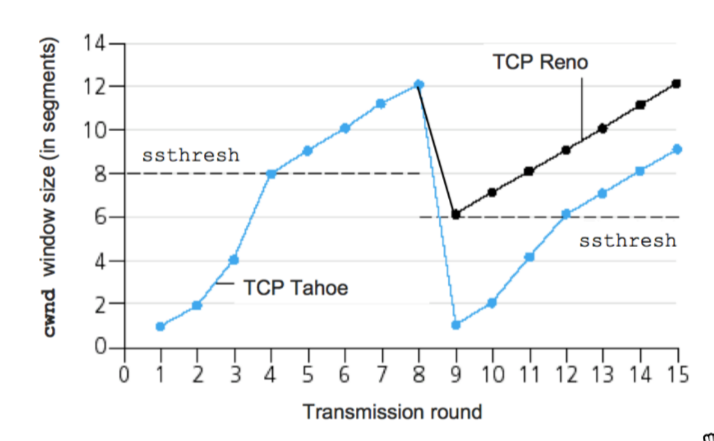
cwndgets to half of its value before timeout (determined byssthreshslow start threshold)React to Loss
Note
- TCP Tahoe = Loss via Timeout
- TCP Reno = Loss via Triple Duplicate ACK
- When loss detected by triple duplicate ACK (TCP Reno)
- no wait for timeout (Fast Retransmit)
cwndis cut in half window then grows linearly- When loss detected by tiemout (TCP tahoe)
cwndis cut to 1 MSS (Maximum segment size— the size of largest segment TCP can send)- enter TCP Slow Start
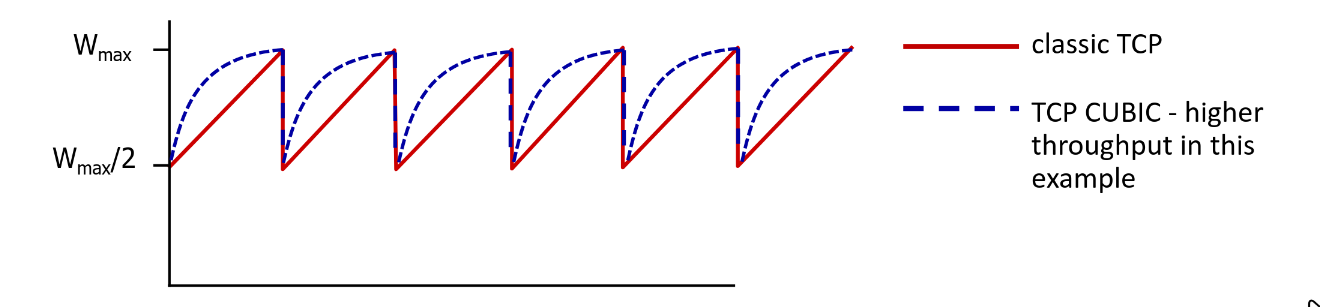
TCP CUBIC
to probe for usable bandwidth
: sending rate at which congestion loss was detected
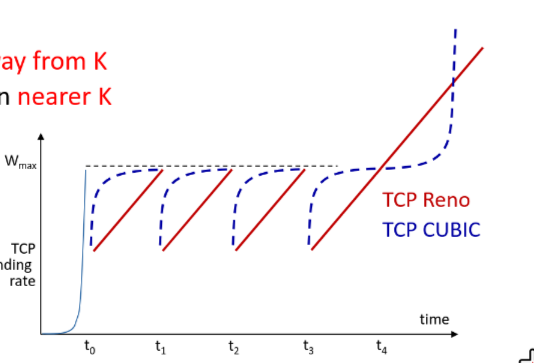
the larger the , the more aggressive the increase in sending rate
is the time when
- Concave Growth (Before K): When the current time is far from K, the window increases rapidly to regain lost throughput. As the time approaches K, the increments become smaller and more cautious to avoid overshooting network capacity.
- Convex Probing (After K): Once the time surpasses K, the function flips, and the window begins to grow more aggressively again to “probe” for new available bandwidth.
Delay-based TCP congestion control
Link to original
- : minimum observed RTT (uncongested path)
- uncongested throughput with congestion window
cwndis- if measured throughput close to uncongested throughput:
- increase
cwndlinearly- if measured throughput significantly less than uncongested throughput:
- decrease
cwndlinearly