Summary
Internet Structure
Full Structure
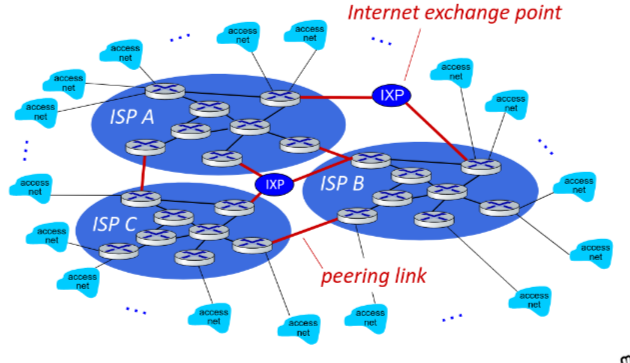
IXP (Internet Exchange Point)
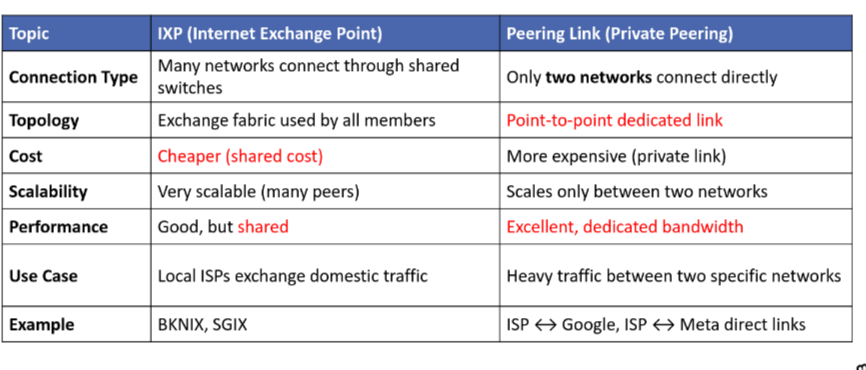
- An IXP is a physical location infrastructure (usually a data center) where different ISPs and content providers (like Google, Netflix, or Facebook) connect their networks together.
- This allows for direct data exchange between networks, improving speed and reducing costs.
Peering Link (Private Peering)
- A peering link is a direct connection between two networks (ISPs or content providers) that allows them to exchange traffic without going through a third party. This is often done to improve performance and reduce costs.
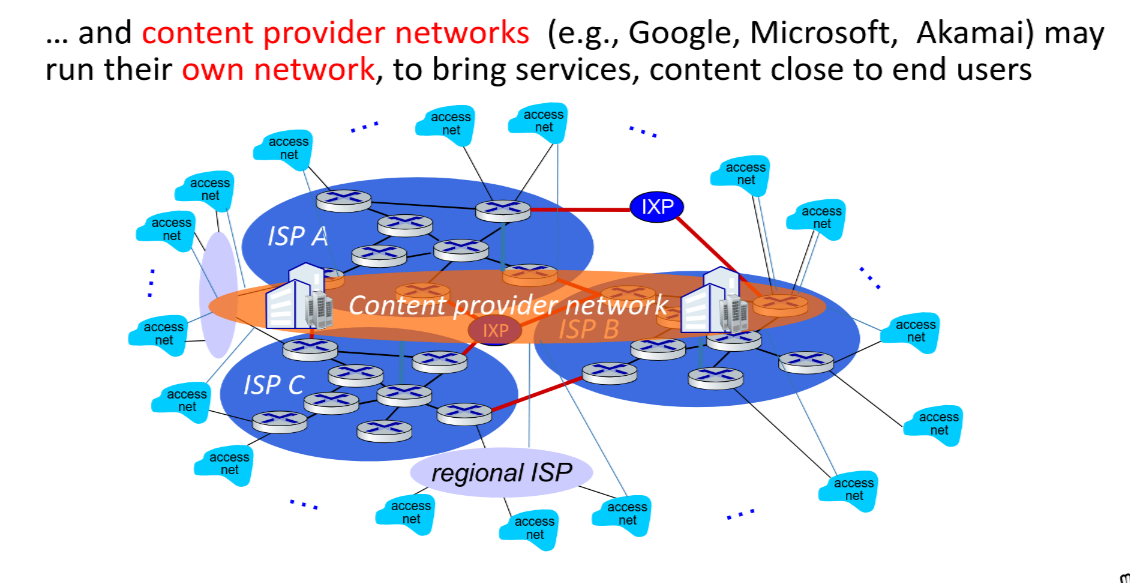
Content Provider Networks
- private network at connects its data centers to Internet, bypassing tier-1, regional ISP
- Google or Meta Network
- Instead of relying entirely on public ISPs, they build their own global backbones and data centers. They often bypass Tier-1 and Regional ISPs by connecting directly to local ISPs at IXPs to ensure faster speed and lower latency for their users.
Point of Presence (POP)
- A POP is simply a physical location where an ISP (Internet Service Provider) has a cluster of equipment (modems, servers, routers) to allow users to connect to their network.
- It acts as a local entry point for the network. The more POPs an ISP has in different locations, the easier it is for users in those areas to connect without long-distance charges or latency.