Note
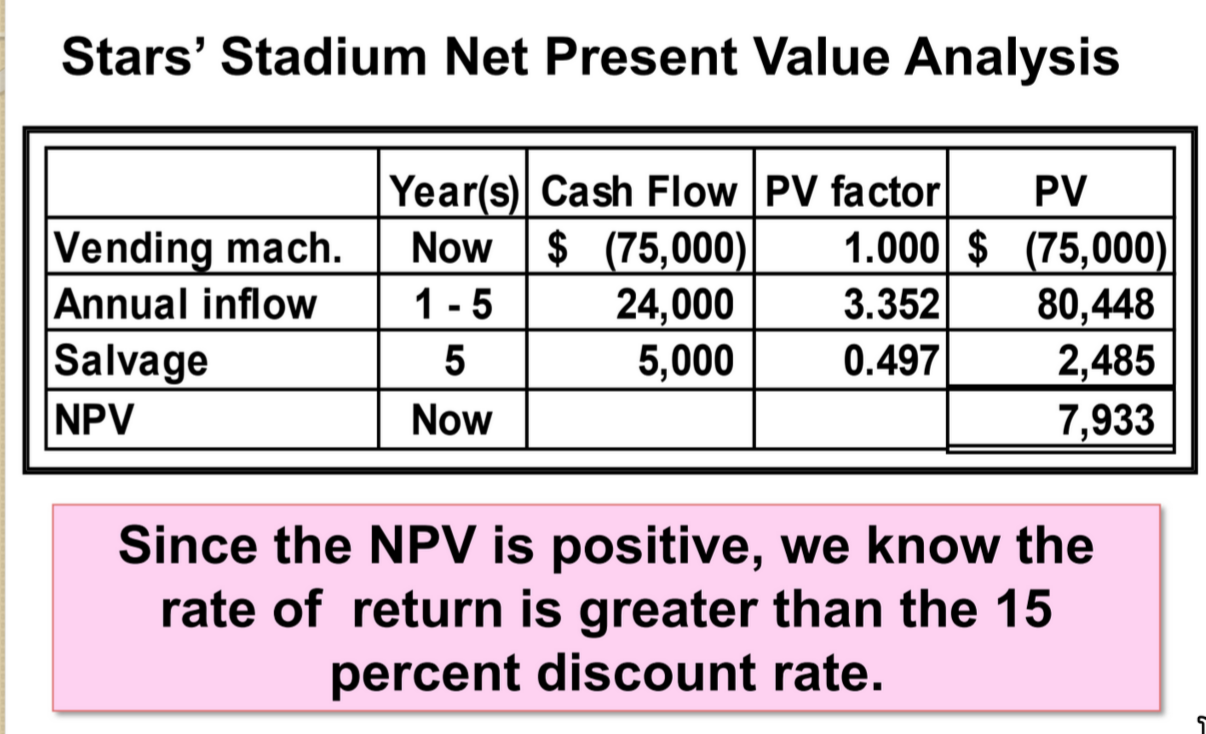
Salvage value is the estimated resale value at the end of its useful life.
Capital Investment (Present Value)
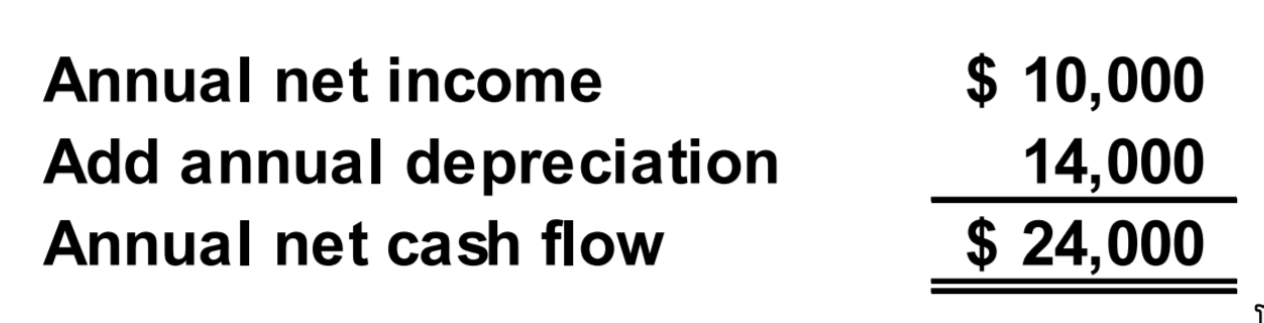
Capital Budgeting use annual net cash flow: Depreciation is not a cash outflow.
Depreciation
The straight-line depreciation method allocates an equal amount of depreciation expense each year over the useful life of the asset.
Payback Period
The payback period is the length of time required to recover the cost of an investment.
Return on Average Investment
The return on average investment measures the profitability of an investment as a percentage of the average investment over its useful life.
where:
Discounting Future Cash Flows
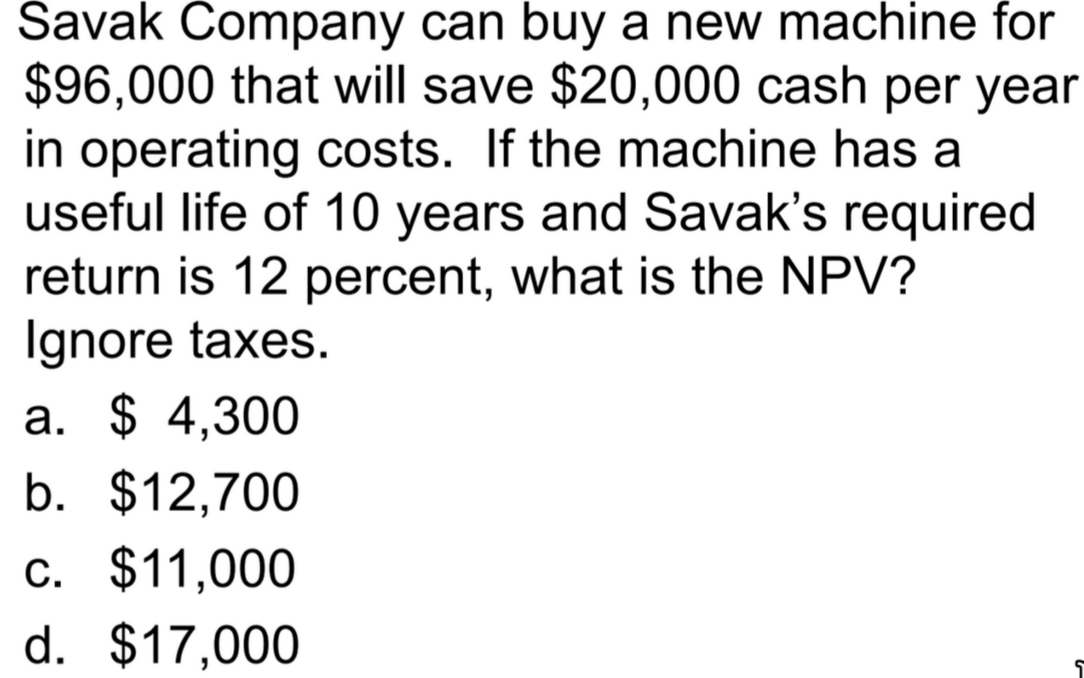
To account for the time value of money, future cash flows are discounted to their present value using a discount rate. Then calculate the present value of cash inflows and cash outflows. Net present value (NPV) is the difference between the present value of cash inflows and outflows.
When NPV is :
- positive: Accept the project
- zero: Indifferent
- negative: Reject the project
PV Factor
For Salvage Value, it tells you what n$ years from now is worth today.
Ex. with 15% interest rate
where:
- = discount rate (15% = 0.15)
- = number of years
| Year | PV Factor (15%) |
|---|---|
| 1 | 0.8696 |
| 2 | 0.7561 |
| 3 | 0.6575 |
| 4 | 0.5718 |
| 5 | 0.4972 |
Annuity Factor
For Annual Net Cash Inflow, it tells you what a series of n$ years is worth today.
Ex. with 15% interest rate
where:
- = discount rate (15% = 0.15)
- = number of years
| Year | Annuity Factor (15%) |
|---|---|
| 1 | 0.8696 |
| 2 | 1.5887 |
| 3 | 2.2832 |
| 4 | 2.8550 |
| 5 | 3.3522 |
 |